Choosing the Right Dune Buggy for Dubai's Desert
Dubai's desert offers a vast playground of rolling sand dunes and open terrain. A dune buggy is one of the most exciting ways to explore it, but picking the right vehicle for your trip can make the difference between a smooth ride and a tough afternoon. With several types of buggies available, from basic models to high-performance machines, knowing what to look for helps you choose wisely.
Understand the Desert Terrain
The first step is getting a feel for the ground you will cover. Dubai's desert is not all soft, fine sand. Some areas have harder-packed gravel patches, while others have steep, soft dunes that shift with the wind. A buggy that handles well on a flat dirt track may struggle on loose sand or climb poorly on a tall dune. Look for a buggy designed specifically for sand. Wider tires with a deeper tread pattern help keep the vehicle moving forward rather than digging in. Buggies built for rocky or muddy trails often have different tire profiles that can sink in sand. Ask about the tire type and whether the buggy has been set up for desert use before you commit.
Engine Power and Size
Engine power directly affects how the buggy performs on dunes. Smaller engines, around 500cc or less, can work for gentle slopes and flatter areas, but they may lack the torque to climb steep dunes, especially when carrying two people. Larger engines, in the 800cc to 1000cc range, give you more control on ascents and help maintain speed on long stretches. That extra power also helps when you need to correct a slide or push through a patch of heavy sand. However, a very powerful buggy can be harder to handle for a beginner. If you are new to off-roading, a mid-range engine offers a good balance of capability and control. Experienced drivers may prefer a higher horsepower option for the thrill of faster climbs and sharper turns.
Seating and Capacity
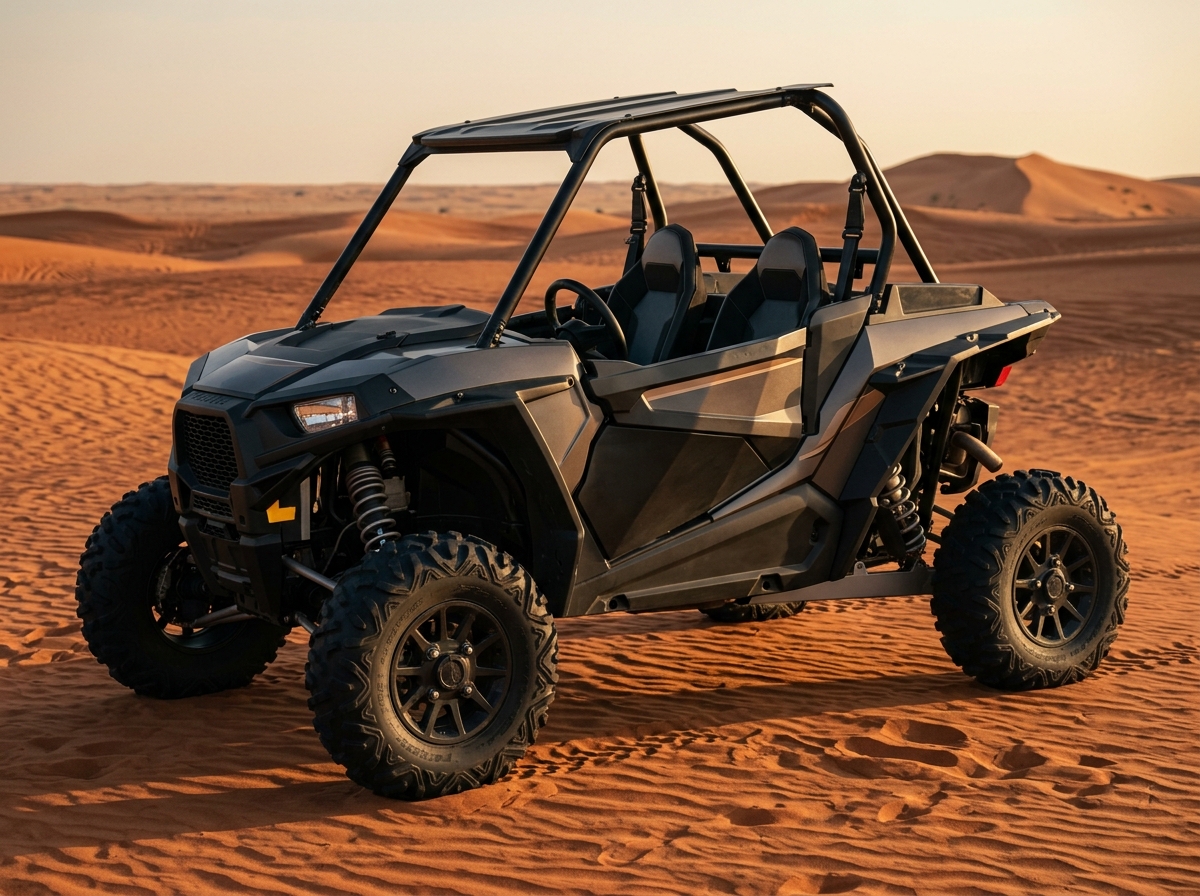
Dune buggies typically seat two people side by side or in a tandem arrangement. Side-by-side seating is more comfortable for conversation and gives both occupants a similar view. Tandem seats place one person behind the other, which can feel more like a race car. Consider who will be riding with you. If you are sharing the experience with someone who may feel nervous, a side-by-side model lets you talk easily and share the excitement. Also check the weight capacity. Some buggies are rated for a total of 200 kilograms or less, while heavier-duty models can carry more. Overloading a buggy affects its handling and can make it harder to climb dunes safely. Always confirm the maximum load and stay within it.
Safety Features to Check
Safety gear is not just an extra. A good buggy should have a sturdy roll cage or frame that protects occupants if the vehicle tips. Seat belts are essential and should be the type that fastens securely across the lap and shoulder. Some buggies come with a harness that keeps you in place during rough sections. Check that the buggy has a working kill switch or emergency shut-off. This is a button or pull cord that stops the engine immediately if you need to get out in a hurry. Brakes are also critical. Look for disc brakes on all four wheels rather than just on the rear axle. Four-wheel braking gives you more stopping power on downhill stretches and when you need to avoid a sudden obstacle. Finally, ask about the condition of the tires. Worn tires reduce grip and increase the chance of getting stuck or losing control.
Test the Controls Before You Go
Before heading into the dunes, spend a few minutes getting familiar with the buggy's controls. Check the steering wheel or steering yoke. Some buggies have a tight turning radius while others require more effort. Try the pedals: accelerator and brake should feel responsive without being too sensitive. If the buggy has a manual transmission, practice shifting through the gears on flat ground. Many desert buggies use an automatic or semi-automatic gearbox, which simplifies driving. Know which type you are getting and whether you need to use a clutch. Also inspect the dashboard for any warning lights or gauges. A simple fuel gauge and a temperature indicator help you avoid running out of gas or overheating in the middle of a ride. If anything feels off or uncomfortable, speak up before you leave the base.
Consider the Duration and Route
How long you plan to ride and where you will go also influence your choice. A short, guided tour on relatively flat terrain may not require a high-power buggy. A longer self-guided trip that includes climbing large dunes and crossing wide open areas demands a more capable vehicle. Some buggies come with a GPS or a basic navigation screen, which is helpful if you are going off the marked trails. Others rely on a guide leading the way. For a longer ride, comfort matters. Check the seat padding and whether the buggy has suspension that smooths out bumps. A buggy with poor suspension can make a two-hour ride feel exhausting. Also ask about the fuel range. Some buggies need a refill after 60 to 80 kilometers, while others can go further. You do not want to run out of fuel far from the base.

Rental Policies and What They Cover
When renting a buggy, read the terms carefully. Look for information about damage liability. Some rentals include basic coverage for minor damage, while others hold you responsible for any repairs. Ask about fuel: whether it is included in the rental price or if you pay for what you use. Also check the age and experience requirements. Many operators require a minimum driving age and may ask for a valid driver's license. The Dune Buggy Adventure official site provides clear details about their rental policies and vehicle options, so it is worth reviewing before you book. Knowing the rules ahead of time prevents surprises on the day of your ride.
Vehicle Maintenance and Condition
A well-maintained buggy performs better and is safer. Before you set out, give the vehicle a quick visual check. Look for any visible damage to the frame, tires, or suspension. Ask when the buggy was last serviced and whether the operator performs regular checks on brakes, belts, and fluids. A reputable operator will have a maintenance log and be happy to show it. If the buggy looks beat up or the tires are badly worn, consider asking for a different one. A poorly maintained vehicle can ruin the experience and create unnecessary risk. The Dune Buggy Adventure official site emphasizes vehicle upkeep, which gives you confidence that the buggy you rent is in good working order.
Listen to Your Instincts
Finally, trust your gut. If a buggy feels too big, too fast, or too old for your comfort level, do not take it. The desert can be unpredictable, and you need a vehicle you feel in control of. Talk to the staff about your experience level and let them recommend a suitable model. A good operator wants you to have a safe, enjoyable ride and will help match you with the right buggy. Take your time, ask questions, and make sure you understand the basics before you start the engine.
Preparing for the Ride
Once you have chosen your buggy, prepare yourself and your group. Wear long sleeves and pants to protect from the sun and sand. Closed-toe shoes with good grip are best. Bring plenty of water and a phone for emergencies. A small backpack or a secure pouch can hold your essentials while you ride. Let someone know your planned route and expected return time, especially if you are going without a guide. Being prepared lets you focus on the experience rather than worrying about the details.
Choosing the right dune buggy for Dubai's desert comes down to matching the vehicle to the terrain, your skill level, and the kind of ride you want. By considering engine size, seating, safety features, and the operator's maintenance standards, you set yourself up for a memorable day on the sand.